What Your Closet Reveals About Who You Are
Clothing is rarely just functional. A wardrobe often becomes an emotional archive — holding memories, identity, comfort, aspiration, and transformation. The pieces we keep, repeat, protect, or avoid often reveal more than aesthetic preference. They reflect emotional experiences, personality traits, self-perception, and the way we move through different stages of life.
Table of Contents
- Clothing as Emotional Language
- The Psychology Behind Wardrobe Attachment
- Personality Traits and Style Behavior
- The Closet as a Timeline of Identity
- Comfort Dressing and Emotional Regulation
- Sentimental Clothing: Memory and Meaning
- Authentic Style vs. Emotional Compensation
- Healing the Relationship with the Closet
- Final Reflection
- FAQ
- Work With Emma.Fashion
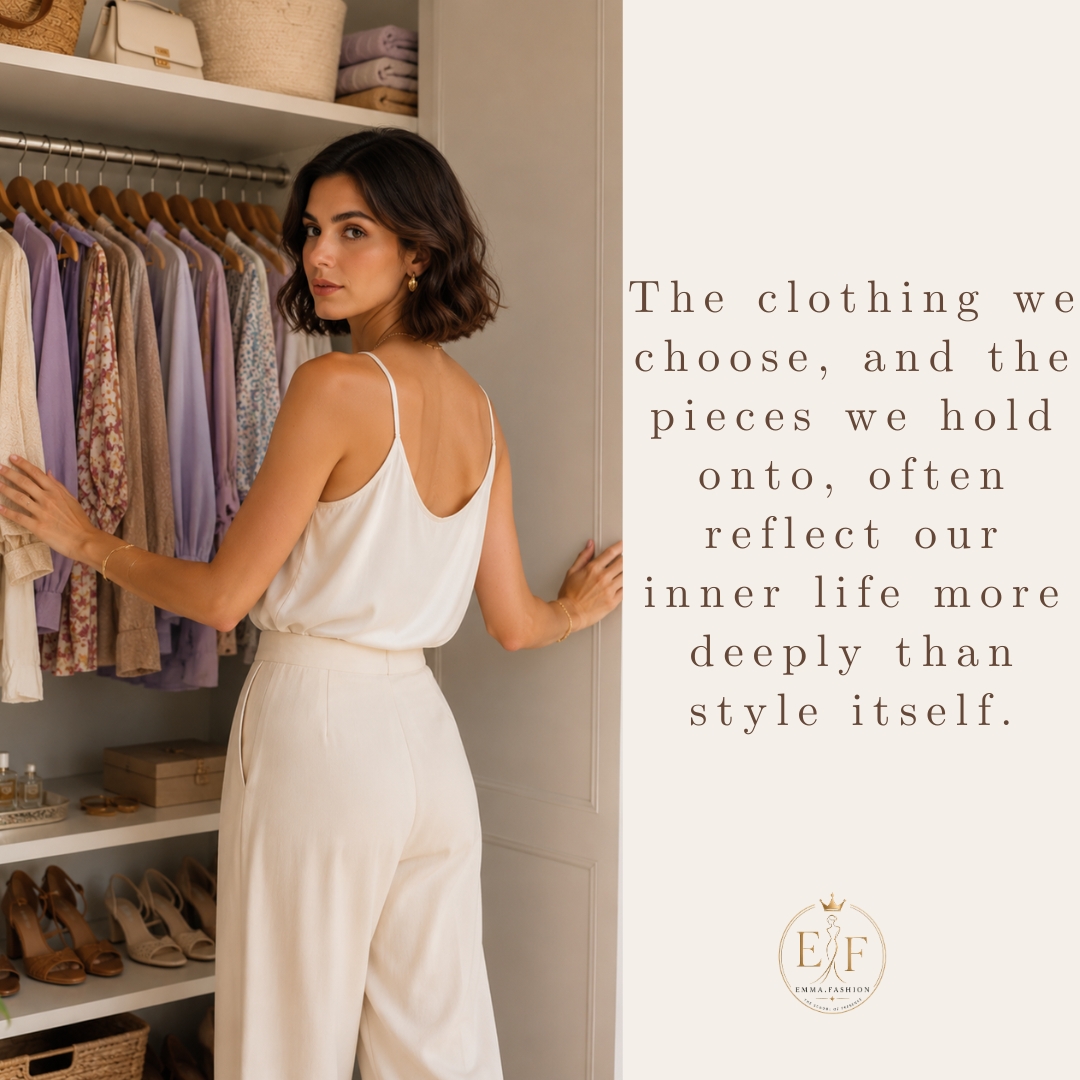
People do not simply wear clothes — they attach meaning to them. A closet often reveals not only how a woman dresses, but how she remembers, protects, expresses, and understands herself. Personal style is deeply psychological because clothing exists close to identity. What we choose to wear — or hold onto — quietly reflects the inner relationship we have with ourselves.
Clothing as Emotional Language
Fashion is often discussed visually, but its emotional dimension is equally powerful. Clothing can symbolize belonging, confidence, safety, aspiration, grief, or transformation. Certain garments become emotionally charged because they are linked to meaningful experiences and moments of identity.
A wardrobe does not only store fabric. It stores emotional associations.
This is why some items feel impossible to release. The attachment is rarely about the garment itself. It is about what the garment represents emotionally and psychologically.
The Psychology Behind Wardrobe Attachment
Clothing becomes emotionally significant for many reasons:
- Emotional security
- Identity reinforcement
- Nostalgia
- Symbolic meaning
- Memory preservation
Psychologically, clothing often acts as an extension of the self. Wardrobes quietly preserve former identities, hopes for the future, and emotionally meaningful chapters of life.
A dress worn during a defining moment. A blazer associated with professional success. A sweater inherited from someone loved. These pieces carry emotional memory beyond their practical function.
People often keep clothing not because they wear it, but because they emotionally inhabit it.
Personality Traits and Style Behavior
Style choices are often shaped by personality. The way someone dresses can reflect emotional comfort zones, communication patterns, and psychological preferences.
Introverted Personalities
- Preference for comfort and familiarity
- Understated elegance
- Emotionally safe clothing
- Repeated silhouettes and trusted combinations
Extroverted Personalities
- Expressive styling
- Experimentation
- Bold colors or statement pieces
- Clothing used as social communication
Highly Sensitive or Emotionally Aware Individuals
- Strong response to textures and fabrics
- Emotional connection to color
- Clothing linked to mood regulation
- Sentimental attachment to garments
Structured or Analytical Personalities
- Capsule wardrobes
- Consistency and predictability
- Timeless pieces
- Intentional repetition
Style is often the visual expression of psychological comfort zones.
The Closet as a Timeline of Identity
A wardrobe often documents emotional evolution more honestly than photographs do. Clothing quietly reflects different chapters of identity:
- University years
- Motherhood
- Career transitions
- Grief
- Reinvention
- Confidence recovery
- Healing after change
Many people keep clothing because it represents who they once were, or who they hope to become again. This creates emotional resistance to letting go.
Sometimes the hardest item to release is not the garment itself — but the version of ourselves attached to it.
Comfort Dressing and Emotional Regulation
Clothing also functions as psychological support. During stress, uncertainty, or emotional fatigue, people often dress differently to regulate internal emotional states.
- Oversized silhouettes may create emotional protection
- Soft fabrics provide sensory reassurance
- Structured clothing can restore confidence and control
- Neutral tones may create calm
- Black may symbolize protection or authority
- Vibrant colors can create emotional energy
People do not only dress for the world around them — they often dress to regulate the world within them.
Sentimental Clothing: Memory, Attachment, and Meaning
Some garments carry emotional meaning that extends far beyond appearance.
Common emotionally significant pieces include:
- Wedding dresses
- Inherited jewelry or garments
- A first “successful” outfit
- Clothing connected to loved ones
- Pieces linked to transformation moments
These items often symbolize belonging, love, confidence, continuity, or validation.
But there is also a difference between honoring memory and remaining emotionally trapped in the past. A meaningful wardrobe preserves memory intentionally without preventing emotional evolution.
A meaningful wardrobe honors memory without trapping identity in the past.
The Difference Between Authentic Style and Emotional Compensation
Not all style expression comes from self-awareness. Sometimes clothing becomes emotional compensation rather than authentic expression.
This may appear as:
- Dressing excessively for validation
- Trend addiction as identity searching
- Overbuying during emotional instability
- Hiding behind clothing personas
Authentic style feels different. It is grounded, emotionally sustainable, and aligned with personality and lifestyle. It creates calm rather than performance.
Style feels most powerful when it expresses identity instead of replacing it.
Healing the Relationship with the Closet
A healthier wardrobe begins with emotional clarity. Instead of dressing from pressure, fantasy, or guilt, style becomes more meaningful when it reflects present reality.
Questions for Reflection
- Which clothing feels most emotionally safe?
- Which items reflect my current life?
- Which garments belong to an older identity?
- What do I wear when I feel most like myself?
- Which pieces create emotional pressure instead of ease?
Building a More Aligned Wardrobe
- Release guilt around clothing
- Let go of identity-based pressure
- Dress from awareness rather than fantasy
- Create alignment between lifestyle and wardrobe
- Choose presence over performance
A refined wardrobe is not built around perfection. It is built around emotional clarity.
Clothing carries emotional memory, identity, and psychological meaning. Personal style is not superficial — it often reflects self-worth, belonging, emotional history, personality, and transformation.
A wardrobe becomes healthier when it evolves alongside the person wearing it.
The most meaningful style does not come from dressing as someone else. It emerges when clothing begins to reflect the truth of who we are — emotionally, psychologically, and personally — in the present moment.
Frequently Asked Questions
What does your closet reveal about you?
Your closet often reflects your identity, emotional history, personality traits, comfort zones, and life transitions.
Why do people become emotionally attached to clothing?
Clothing can symbolize memory, confidence, belonging, identity, and emotionally significant moments.
Can clothing affect emotional well-being?
Yes. Clothing often influences mood, confidence, comfort, and emotional regulation.
What is authentic personal style?
Authentic style reflects personality, lifestyle, and emotional alignment rather than external pressure or trends.
How do you build a more intentional wardrobe?
Focus on emotional clarity, lifestyle alignment, and choosing clothing that supports who you are in the present moment.
Work With Emma.Fashion
If you want to better understand your relationship with style, refine your personal image, and build a wardrobe that reflects your identity with clarity and intention, Emma.Fashion offers guidance designed around authenticity, emotional awareness, and modern elegance.
Discover how to create a wardrobe that supports who you are — not just visually, but emotionally and personally.


Comments