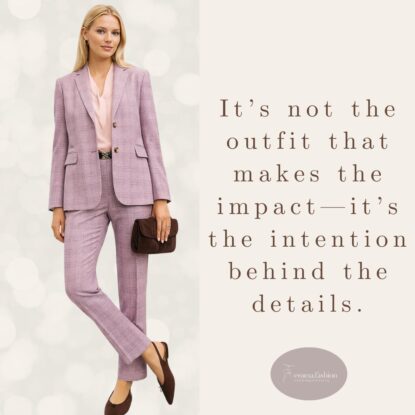
Just Dressed vs. Intentionally Styled: How Details Create Presence
Where the Difference Lives in the Details
There is a subtle yet powerful distinction between being dressed and being intentionally styled. At first glance, both may appear polished. Both may follow trends. Both may suit the occasion. Yet one feels complete and composed, while the other feels slightly accidental, as if something essential is missing.
What separates the two rarely lies in the main garment itself. It is not about the dress, the blazer, or the trousers. The difference lives in the details — in the quiet decisions that shape how an outfit comes together and how it feels once worn.
What “Just Dressed” Looks Like
Being “just dressed” means the essentials have been met. You selected something appropriate, put it on, and moved on with your day. The outfit functions; it fulfills its purpose. And yet, there is often a subtle sense of incompletion.
Perhaps the proportions are slightly off, with a top that overwhelms the frame or trousers that shorten the silhouette. Perhaps the shoes do not quite align with the mood of the outfit, or the accessories were added as an afterthought rather than as part of a cohesive vision. The result is not wrong — it is simply neutral. The look feels assembled rather than composed.
Nothing clashes, yet nothing fully aligns. The energy is functional, fine, acceptable. But fine rarely lingers in memory.
What “Intentionally Styled” Feels Like
Intentional styling begins before the mirror. It starts with a question: How do I want to show up today? That question shifts the process from habit to awareness, from routine to refinement.
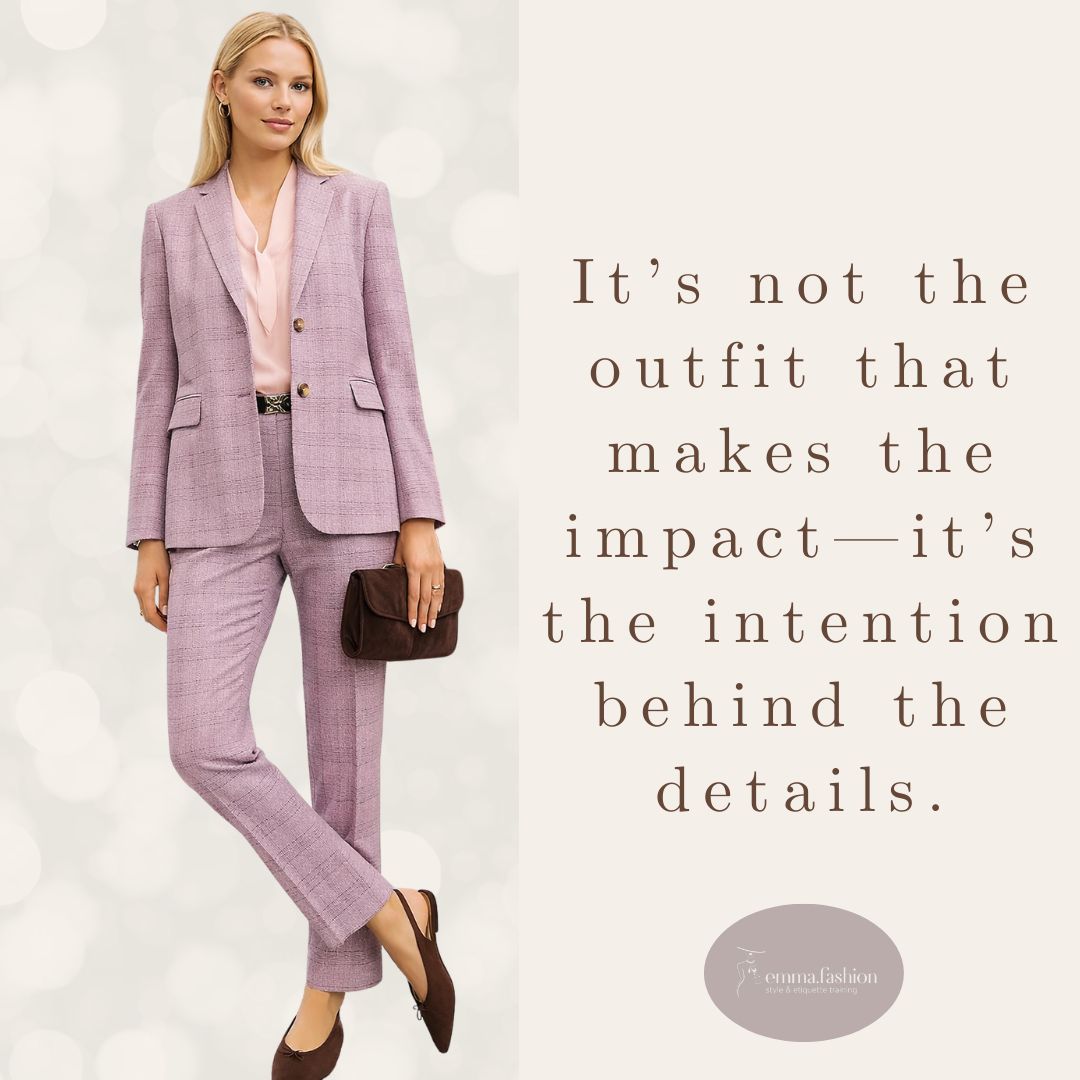
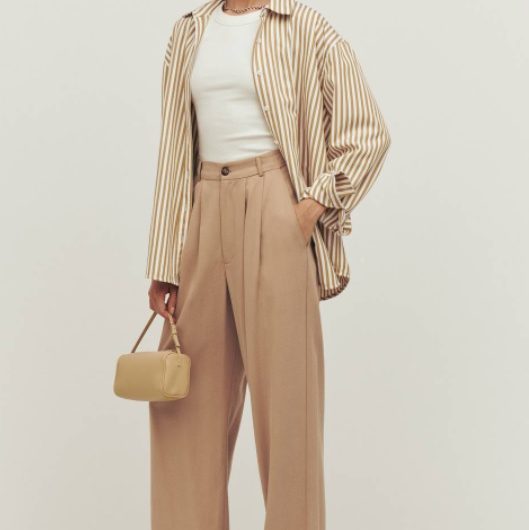
When intention guides your choices, details naturally begin to align. A sleeve is pushed back deliberately to reveal the wrist. A belt defines the waist without creating tension. The shoes support the silhouette rather than interrupt it. Jewelry complements the mood instead of competing for attention.
In an intentionally styled outfit, nothing feels random. Each element belongs. And it is this coherence — this sense of alignment — that creates presence.
The Power of Details
Details are often misunderstood as decoration, but in truth, they are direction. They shape the narrative of the outfit and influence how it is perceived.
Proportion, for example, determines visual balance. When the top and bottom harmonize, when the coat supports rather than overwhelms the base layer, the silhouette feels calm and composed. Texture also plays a quiet but powerful role. A silk blouse encourages fluid movement, while a structured blazer subtly straightens posture. Leather grounds softness; wool softens structure.
Finishing touches complete the story. Clean shoes, pressed fabric, a well-chosen bag, neatly groomed hair — these small refinements communicate care. And care communicates credibility.
How Details Shape Behavior
The influence of intentional styling extends beyond appearance; it affects behavior. When an outfit feels complete and aligned, movement changes. Posture lifts. Gestures slow. There is less adjusting, less self-consciousness, less distraction.
You stop thinking about what you are wearing and begin focusing on the room, the conversation, the opportunity before you. Friction dissolves. Energy steadies. Presence expands.
This is the quiet power of intentional styling: it allows you to inhabit your space fully.
Styling Is a Form of Respect
Intentional styling is not vanity; it is awareness. It communicates respect for the setting you are entering, for the people you will encounter, and for yourself. It signals that you understand context and that you care about how you show up within it.
The difference between “just dressed” and “intentionally styled” may be subtle to the untrained eye, but it is always felt. Alignment has weight. Coherence has presence.
How to Move from Dressed to Styled
Transitioning from dressed to styled does not require a new wardrobe; it requires a shift in attention. Ask yourself whether every piece belongs, whether there is a clear focal point, whether the outfit reflects your intention for the day, and whether you would feel comfortable entering any room in it.
If the answer is yes, you are no longer simply dressed. You are styled.
Clothing covers the body, but styling reveals the mindset behind it. The distinction between being dressed and being intentionally styled lives in small decisions — decisions made with awareness rather than habit.
And those decisions, repeated over time, shape more than your image. They shape your presence.
Comments