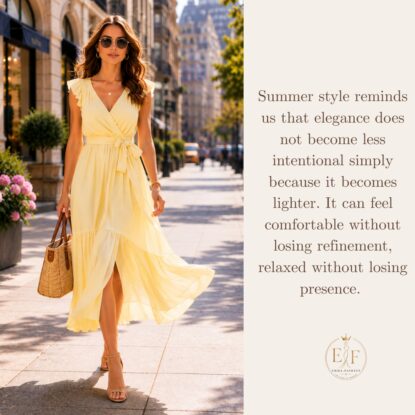
The Psychology of Summer Dressing: Why We Dress Differently in Warm Weather
Every season influences the way we dress, but summer seems to affect us differently. As temperatures rise, wardrobes become lighter, colors become brighter, and many people feel an unexpected desire for change. Dresses replace structured layers. Linen replaces wool. Sandals replace closed shoes. Even those who rarely experiment with style often find themselves reaching for something new.
Table of Contents
- Summer Creates a Sense of Emotional Expansion
- The Desire for Freedom Influences What We Wear
- Summer Encourages Greater Self-Expression
- Color Psychology Changes in Summer
- Summer Dressing Reveals Our Relationship with Comfort
- Seasonal Reinvention
- Style, Presence, and the Summer Mindset
- FAQ
- Work With Emma.Fashion
At first glance, these choices appear practical. Yet beneath the fabric lies something deeper. Summer dressing is not only a response to weather. It is also a response to emotion, perception, freedom, and identity. Perhaps the way we dress in summer reveals as much about our psychology as it does about the forecast.
Summer Creates a Sense of Emotional Expansion
Longer days, increased sunlight, and more time spent outdoors often create a subtle psychological shift. Many people feel more open, more social, and more willing to engage with the world around them. This emotional expansion naturally influences clothing.
As our inner state becomes lighter, our wardrobe often follows. We reach for softer fabrics, brighter colors, relaxed silhouettes, and pieces that allow movement. Summer clothing often reflects an internal desire for ease.
This is why summer style can feel less controlled than winter style. It invites a sense of openness. The body wants breathability, but the mind often wants possibility.
The Desire for Freedom Influences What We Wear
Summer is culturally associated with vacations, travel, leisure, outdoor living, and escape from routine. Even when daily responsibilities remain unchanged, the season carries a psychological promise of freedom.
This explains why flowing dresses, wide-leg trousers, relaxed shirts, and natural fabrics feel especially appealing. They are not only comfortable. They symbolize release from structure.
A linen dress does not simply feel lighter than a tailored suit. It communicates a different relationship with the day. It suggests ease, movement, and a softer rhythm of living.
Summer Encourages Greater Self-Expression
Summer clothing naturally reveals more of the body. Sleeveless tops, dresses, sandals, open necklines, and lighter fabrics bring greater visibility. Because of this, summer often intensifies the relationship between clothing and self-perception.
People may become more aware of their body, their confidence, their identity, and the way they are seen. This can create both freedom and vulnerability.
For some, summer brings a desire to feel more attractive, expressive, and authentic. For others, it brings comparison, discomfort, or uncertainty. The psychology of summer dressing is not only about looking lighter. It is also about navigating visibility.
The most intentional summer style does not force exposure. It honors comfort, proportion, and personal confidence.
Color Psychology Changes in Summer
During colder months, wardrobes often become dominated by darker neutrals. In summer, many people naturally move toward white, soft blue, coral, yellow, pink, green, and other colors that feel fresh and alive.
Color communicates emotion. It can suggest energy, optimism, vitality, softness, confidence, or calm. In summer, color often becomes a way of participating in the emotional atmosphere of the season.
White can feel clean and fresh. Coral can feel warm and expressive. Blue can feel serene and open. Green can suggest renewal. Yellow can introduce joy and lightness.
Summer colors often mirror the feeling people wish to experience — not only the image they want to create.
Summer Dressing Reveals Our Relationship with Comfort
Comfort is not simply physical. It is psychological. What we choose in warm weather often reveals how we relate to ease, structure, and control.
Some people dress more casually in summer because they associate comfort with freedom. Others maintain structure year-round because polish gives them confidence and emotional security.
Neither approach is wrong. The difference often reflects personality. Some people feel most themselves in relaxed clothing. Others feel more grounded when their outfit has shape and definition.
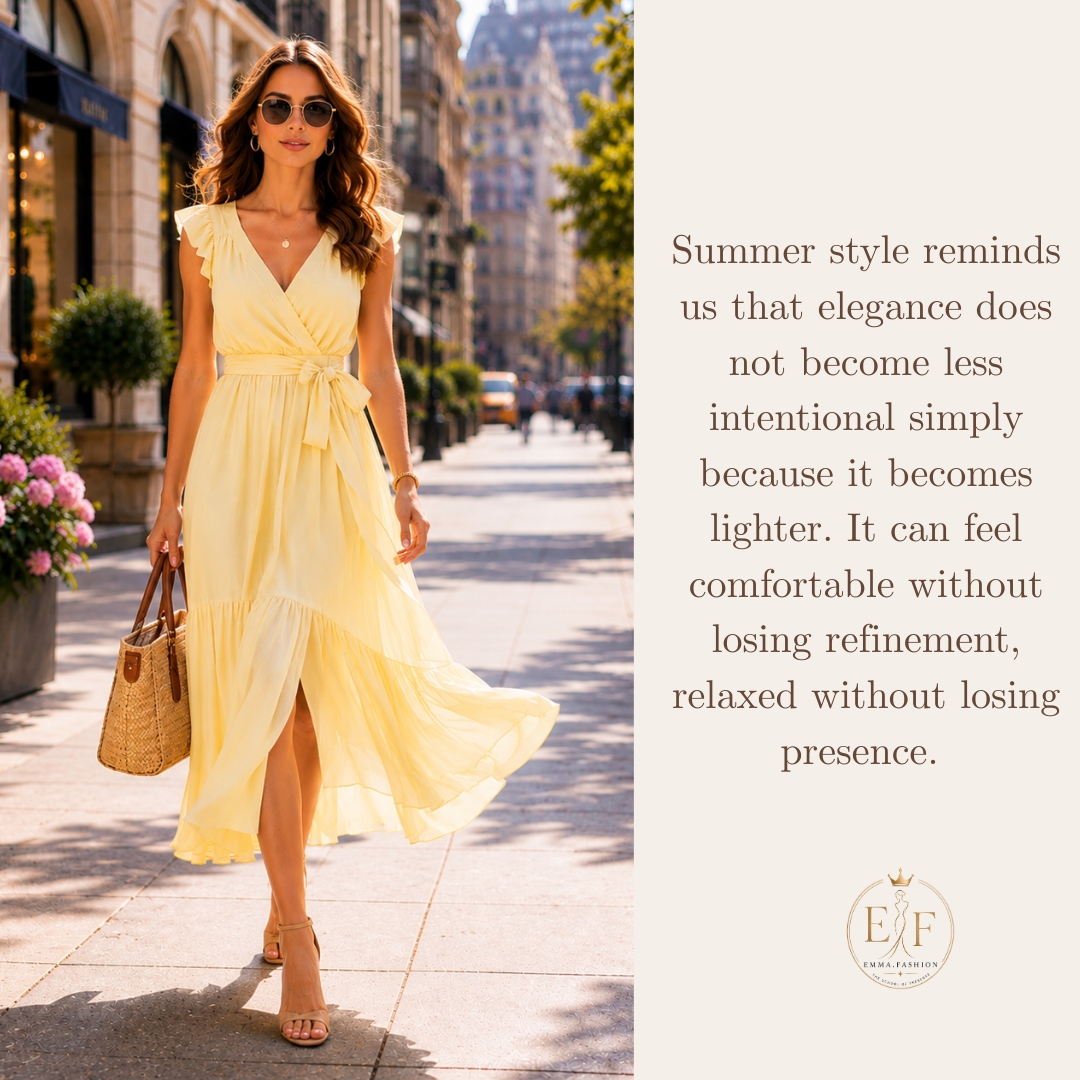
Summer dressing becomes most elegant when comfort and intention coexist. A relaxed silhouette can still feel refined. A polished outfit can still feel breathable. The key is not choosing between comfort and presence, but allowing them to support one another.
Seasonal Reinvention: Why Summer Makes Us Want to Change
Many people associate January with new beginnings, but summer often creates a quieter form of reinvention. The season invites movement, exploration, visibility, and emotional openness.
This is why people often change their hairstyle, refresh their wardrobe, experiment with color, or adopt a new style direction during warm months.
Clothing becomes one of the easiest ways to express personal evolution. A brighter dress, a new silhouette, or a softer fabric can become a small but meaningful signal that something within us is shifting.
Summer creates a sense of possibility. And style often becomes the first visible place where that possibility appears.
Style, Presence, and the Summer Mindset
The most meaningful aspect of summer dressing is not the clothing itself. It is the emotional state behind it.
Summer reminds us that style can feel lighter without becoming careless. Comfortable without becoming indifferent. Relaxed without losing elegance.
True summer style is not about dressing for the season alone. It is about dressing in alignment with how you wish to experience the season.
We often assume we dress differently in summer because the weather demands it. Yet the deeper reason may be psychological. Summer changes how we feel. And how we feel inevitably influences how we present ourselves.
The fabrics become lighter. The colors become brighter. The silhouettes become softer. But perhaps what truly changes is our willingness to express ease, freedom, and possibility.
Because clothing is never only about temperature. It is also about the emotional climate we carry within us.
Frequently Asked Questions
Why do people dress differently in summer?
People dress differently in summer because warm weather affects comfort, mood, visibility, lifestyle, and emotional expression. Clothing becomes lighter not only physically, but psychologically.
How does summer influence personal style?
Summer often encourages more relaxed silhouettes, brighter colors, natural fabrics, and greater self-expression. It can also inspire seasonal reinvention.
Why do we wear brighter colors in summer?
Brighter colors often reflect energy, optimism, freshness, and vitality. In summer, color becomes a way of expressing the emotional atmosphere of the season.
Is comfort part of personal style?
Yes. Comfort is both physical and psychological. The clothing we feel comfortable in often reflects our personality, confidence, and emotional needs.
How can summer dressing remain elegant?
Summer dressing remains elegant when comfort is balanced with intention, proportion, fabric quality, and respect for the setting.
Work With Emma.Fashion
If you want to understand your personal style more deeply, refine your wardrobe, and dress with intention through every season, Emma.Fashion offers guidance rooted in presence, clarity, and authentic self-expression.
Discover how to align your wardrobe with who you are — emotionally, personally, and visually.
Comments