Distinction Through Style: When Personality Becomes Visible
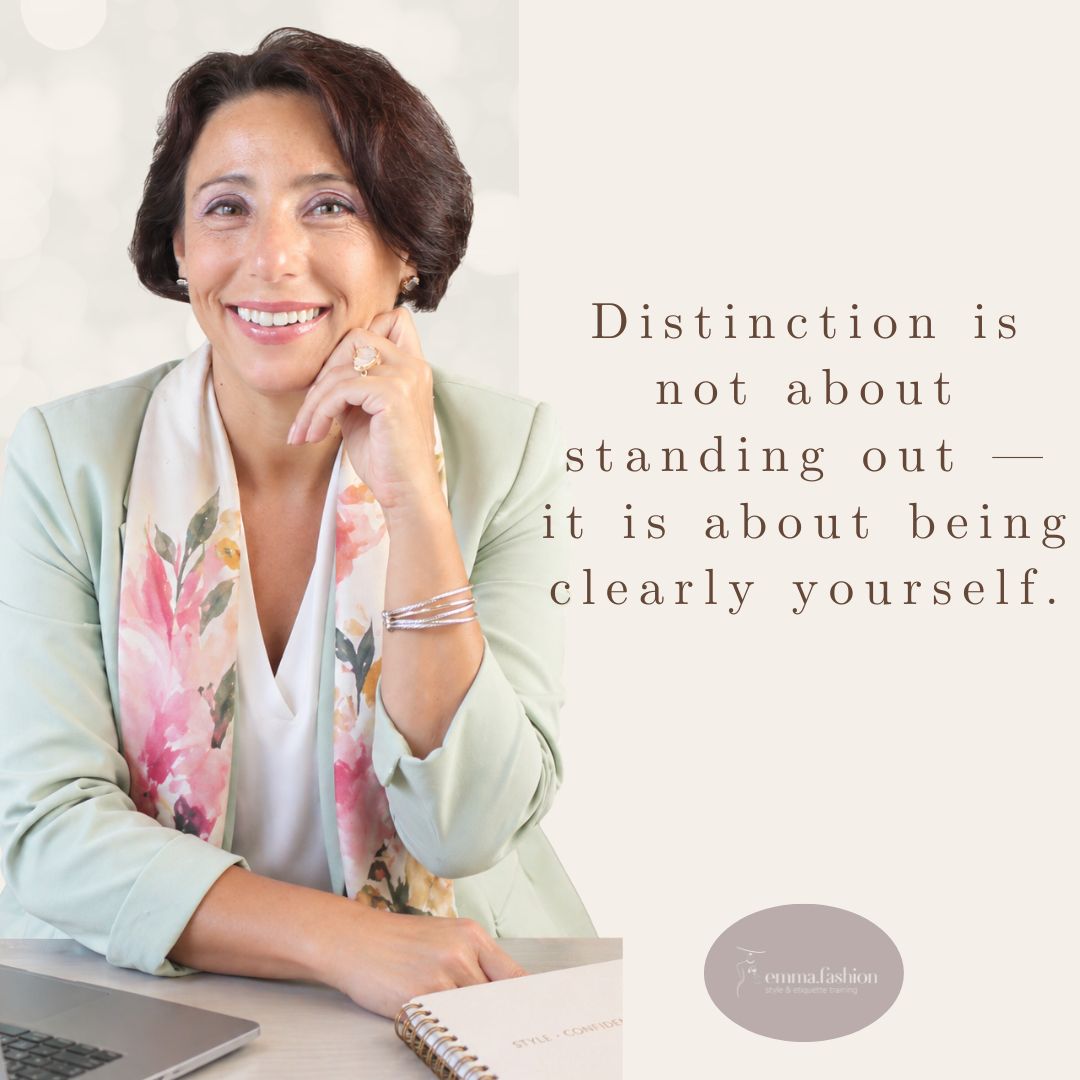
Distinction is often misunderstood as standing out. In reality, it is something quieter and more refined. True distinction is not loud — it is recognizable, consistent, and coherent. It comes from alignment between who you are and how you present yourself.
Table of Contents
- What Creates Distinction
- Style vs. Personality
- Why Personality-Based Style Creates Distinction
- The Risk of Trend-Driven Style
- Defining Your Personal Style Through Personality
- The Role of Authenticity
- Distinction Through Simplicity
- The Psychology of Being Remembered
- From Style to Presence
- FAQ
- Work With Emma.Fashion
Distinction is not created through trends. It is revealed through authentic expression. When style reflects personality, it becomes more than clothing — it becomes a form of communication that others can recognize and remember.
What Creates Distinction
Distinction is not about being different for the sake of attention. It is about being consistent in a way that feels true. When your appearance aligns with your behavior and communication, your presence becomes clear and grounded.
This clarity is what people notice. Not because it demands attention, but because it feels complete.
Style vs. Personality
The Difference
Style is the outward expression. Personality is the internal identity. One is visible, the other is felt.
The Connection
Style becomes powerful when it reflects personality. Without this connection, it can feel performative or inconsistent.
Style is the visual language of personality.
Why Personality-Based Style Creates Distinction
Consistency Creates Recognition
Repeated visual cues build memory. Over time, people begin to associate you with a certain presence.
Clarity Builds Trust
When your image aligns with your behavior and communication, others perceive you as grounded and authentic.
Authenticity Creates Ease
When style reflects who you are, there is no need to overthink or adjust constantly. It becomes natural.
Distinction is not forced — it is felt.
The Risk of Trend-Driven Style
Trends often encourage imitation rather than expression. They can disconnect style from identity, creating a look that feels current but not personal.
When style is driven only by trends, it becomes interchangeable. It may look polished, but it lacks individuality.
Without personality, style becomes interchangeable.
Defining Your Personal Style Through Personality
Personal style begins with understanding yourself. It is not about choosing what looks good — it is about choosing what feels aligned.
- Values — what matters to you
- Lifestyle — how you live daily
- Energy — how you naturally show up
- Preferences — what you are consistently drawn to
Ask yourself: Does this reflect who I am — or who I think I should be?
The Role of Authenticity
Authenticity is not about expressing everything. It is about expressing what is true and relevant to you.
Signs of authentic style:
- It feels natural to wear
- It requires minimal adjustment
- It aligns with your environment
Authenticity creates quiet confidence — a presence that feels composed rather than constructed.
Distinction Through Simplicity
Distinctive style is often simple. It does not rely on complexity or excess, but on clarity and repetition.
Identity is built through consistency:
- Consistent silhouettes
- Signature colors
- Recognizable details
Distinction comes from clarity, not excess.
The Psychology of Being Remembered
People do not remember every detail. They remember patterns, feelings, and consistency.
- Patterns create recognition
- Feelings create connection
- Consistency creates memory
You are remembered not for what you wore once, but for how you consistently showed up.
From Style to Presence
Distinction is the result of alignment. When your style reflects your personality, your presence becomes effortless and unmistakable.
Style is no longer something you try to create. It becomes something you naturally express.
When what you wear aligns with who you are, distinction is not something you pursue — it is something others perceive.
Frequently Asked Questions
What creates a distinctive personal style?
Consistency, authenticity, and alignment between your personality and outward appearance create a distinctive style.
Is following trends necessary for style?
No. Trends can inspire, but true style comes from personal expression rather than imitation.
How do I make my style more authentic?
Focus on your values, lifestyle, and natural preferences. Choose what feels aligned rather than what is expected.
Can simple outfits still feel distinctive?
Yes. Simplicity combined with consistency often creates the strongest and most recognizable style.
Why is consistency important in style?
Consistency builds recognition and trust, making your presence more memorable and coherent.
Work With Emma.Fashion
If you want to refine your personal style, build a wardrobe that reflects your personality, and develop a presence that feels authentic and consistent, Emma.Fashion offers guidance designed around clarity, confidence, and intentional expression.
Discover how to express who you are through style — with ease, refinement, and purpose.
Comments